
I have met many people who struggle with sleep.
And sleep, as we all know, is essential to well-being. A chronic lack of it can leave us feeling off balance… disoriented… not quite ourselves.
Over time, I’ve begun to notice something — not in a judging way, simply in observation.
The people who have the hardest time sleeping are often the same people who have the hardest time being still.
Their days are full.
Their minds are active.
Doing nothing feels uncomfortable.
So when night arrives, they try to suddenly turn everything off.
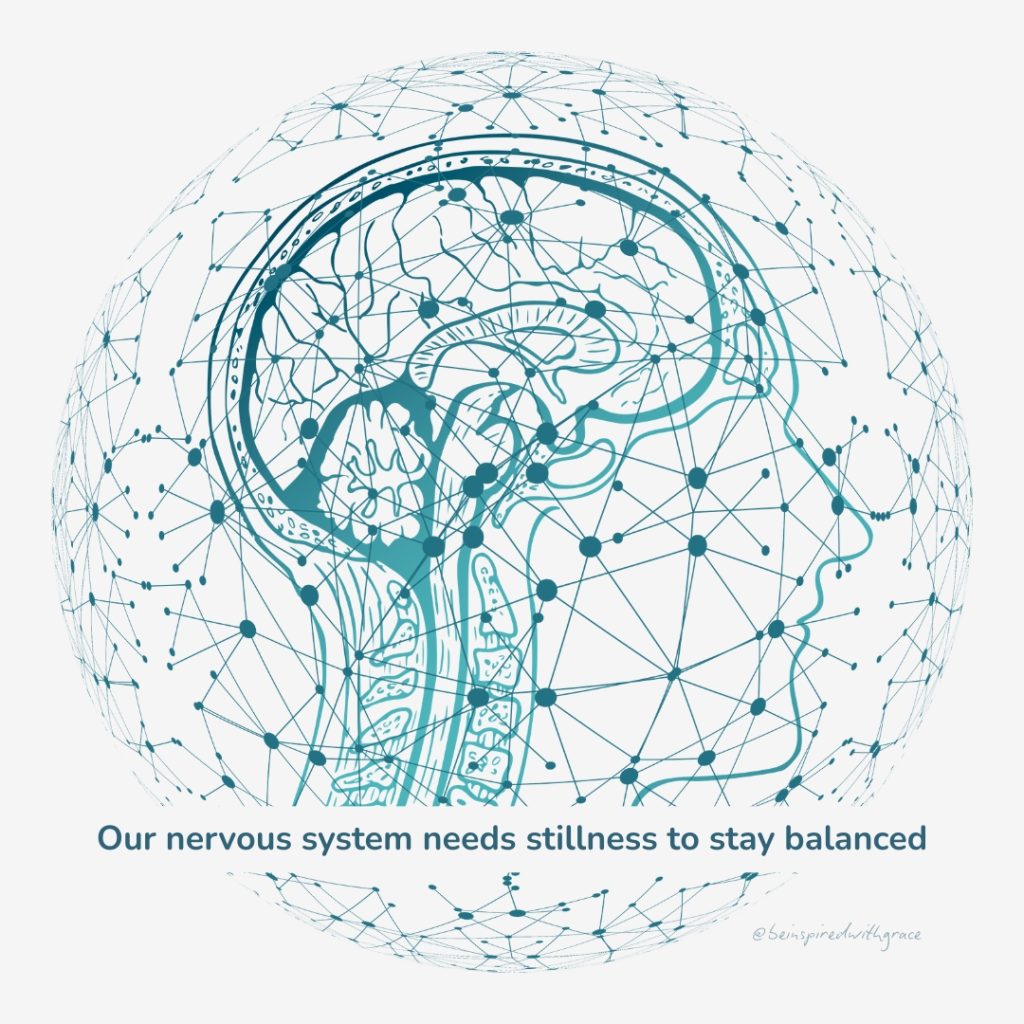
But the nervous system does not work like a light switch.
It works more like momentum.
If the body lives in motion all day,
if the mind is constantly solving, planning, scrolling, responding —
that momentum doesn’t simply disappear because the clock says it’s bedtime.
This is where the practice of stillness becomes important — not only on the mat, but in life.
Yoga helps us access it, yes. Movement can prepare the body to rest. But there also has to be a moment outside of practice where we simply allow ourselves to be.
Many people struggle with meditation because they believe they must create peace.
But perhaps peace already exists.
We are not trying to manufacture calm.
We are learning to notice it.
Even a few minutes a day — sitting quietly, feeling the breath move in and out, noticing the sounds around you without labeling them — begins to teach the nervous system another way of being.
No fixing.
No performing.
No trying to get anywhere.
Just awareness.
And over time, the body learns:
It is safe to settle.
It is safe to soften.
It is safe to rest.
Night then becomes less of a battle,
and more of a continuation of what was practiced during the day.
Stillness was never absent.
It was simply covered —
by thoughts we keep following,
by the constant need to be doing,
by the habit of filling every quiet space.
When those layers soften, even briefly, something underneath is already calm.
We don’t create it.
We uncover it.
And the nervous system remembers.